
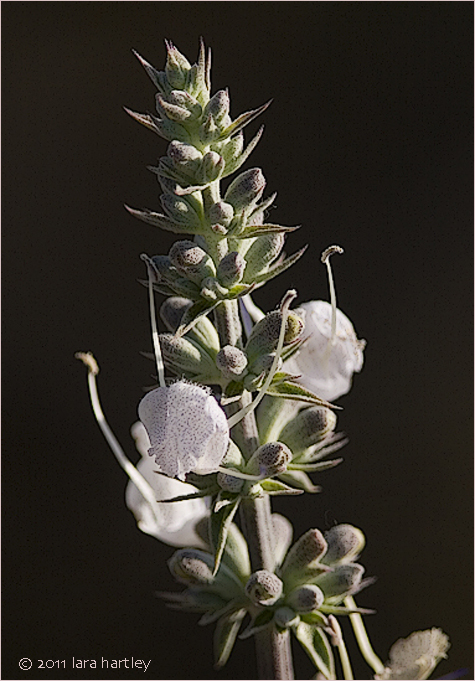
 The Healer frequently starts treatment with white sage (Salvia apiana), which purifies the central nervous system to help a person maintain integrity. White sage is called khapshikh by the Barbareno, Ineseno and Ventureno Chumash.
This evergreen perennial shrub is characterized by it’s broad, slightly fuzzy, very light green leaves. It is considered one of the most useful and sacred sages in California. The Chumash considered white sage to be their “everyday plant”; it was said that one should suck on a leaf or drink it in water everyday in order to strengthen your soul and to remain calm, peaceful and healthy. The dried leaves of the sage were bundled and burned, and the combination of prayer and sweet smoke was thought to protect, cleanse, and heal. Sucking on a leaf of white sage or drinking water with leaves in it is especially useful for sore throats. Other medicinal uses of white sage include relief of stomach aches, tooth aches, colds, flu, asthma, to promote menstruation, and to cleanse skin wounds and rashes. The Luiseno and Cahuilla used white sage as a shampoo and deodorant, making a shampoo by rubbing fresh leaves between the palms with water. It also is said that smoking white sage can induce sacred dreams and help people recovering from addiction, due to the calming effects of the smoke and the good spirits it is said to attract. (Reid, Sara; Wishingrad, Van; McCabe, Stephen Plant Uses: California; Native American Uses of California Plants- Ethnobotany University of Santa Cruz June 2009)

White sage, or Salvia apiana, is a hardy, fragrant herb in season from May through September that grows throughout North America. It flourishes in arid climates in full sunlight. The color of the plant is silver and green and its flowers are white or purple. Native Americans have used sage for medicinal and ceremonial purposes for centuries.
Traditional Medicinal Uses:
Native American tribes in California traditionally placed white sage seeds in their eyes at night to collect impurities. Native American women drank white sage root tea after giving birth to encourage the expulsion of the afterbirth and promote healing. The smoke from the white sage plant used in sweat houses released volatile oils that relieved symptoms of the common cold. The plant’s leaves functioned as a hair cleanser and to inhibit the development of gray hair. (“White Sage Facts” Tara Carson February 15th, 2011 Livestrong.com)
Ceremonial Use:
Native Americans valued white sage as a ceremonial plant. They placed sage in ceremonial locations, such as the sweat lodges and altars, positioning the flowering side of the plant facing the fire. They used white sage as an incense to cleanse and fend off evil spirits, sickness and negative feelings. The plant’s purification properties also cleansed inanimate objects, such as utensils, weapons and living quarters.(“White Sage Facts” Tara Carson February 15th, 2011 Livestrong.com)
Chumash Healing Herb:
White sage was an important healing herb for the Chumash Native American tribe in California, according to a 2005 review by researchers at the University of Southern California School of Pharmacy. According to the report, the Chumash gathered the plant carefully, praying and taking only the minimum amount needed. They dried any excess leaves for later use. Chumash healers initiated medical treatment by burning white sage, purifying the patient’s central nervous system. The patient drank water infused with sage leaves. The plant destroyed harmful pathogens, soothed sore throats and reduced inflammation. The principal active ingredient responsible for white sage’s medicinal effects is cineole. (“White Sage Facts” Tara Carson February 15th, 2011 Livestrong.com)
Culinary Uses:
Native Americans in California used white sage seeds as food. They collected and dried the seeds and ground them into meal. They used the meal to create batter for cakes, biscuits and porridge. The tribes collected and stored extra seeds for use during the winter. The Chumash tribe also used white sage leaves and stems as culinary ingredients. (“White Sage Facts” Tara Carson February 15th, 2011 Livestrong.com)
Smudging:
The traditional Chumash way to do this is to use small branches, about 6 inches long, of dried white sage. The white sage should not be bound with yarn or string. This can cause the white sage to mold. Gently suck on the end of the branch and gently touch each leaf after harvesting. Remember that white sage is spirit medicine and should not be wasted by simply burning it like incense. When white sage is smudged, everyone should be praying. ( James D. Adams, Jr and Cecilia Garcia The Advantages of Traditional Chumash Healing (2005). Published by Oxford University Press)

White sage, like any plant, should be collected with prayer. Only the amount needed should be collected. A small branch or a single leaf can be broken off for each use. Each leaf contains vital medicine for the health of the spirit.
Abalone shells have always been used by the Chumash – then and now – during religious and healing ceremonies, often as vessels for burning white sage.
Abalone were found in large, thick colonies along the south coast of California, as well as the Channel Islands, for thousands of years. But, because of changes in the climate, as well as having been “overfished”, it has become more scarce – almost extinct – during the past 40 years.

The Chumash harvested the abalone for its sweet and nutritious meat, and for the beautiful shells that were used as bowls, money, jewelry. Abalone shell was also carved into sturdy fish hooks, using the natural inner curve of the shell.
The healer, or an elder from the village, put a small branch of dried white sage in a suitable container such as a seashell,typically an abalone shell. The white sage was ignited withfire. The flames were blown out allowing the white sage to smolderand smoke. The smoke from white sage has a pleasant smell andis thought to help carry prayers to God. The healer prayedfor the health of the patient while moving the seashell to allowthe smoke to touch every part of the patient’s body includingthe soles of the feet. The healer sometimes touched the patient’s back with an eagle or hawk wing to draw out harmful spirits(nunasus). The wing was then flicked down to send the harmfulspirits back into the underworld where they originated.Smudging with white sage is still practiced by Chumash people today. (James D. Adams, Jr and Cecilia Garci Spirit, Mind and Body in Chumash Healing, Oxford Journals)
Much of the following is from an article titled “The Workout That Time Forgot” by Nick Heil in Outside Magazine, December 16th 2010:
 MovNat is founded on three “pillars” of movement: Natural, Evolutionary, and Situational. As such, it’s a system that aims to respect the environment, align with our biological heritage, and have practical application to real-world challenges.
MovNat isn’t something that lends itself to strict, rigid programming. The whole point of natural movement is that it should be integrated into all of our physical activity.
Erwin Le Caorre is a movement coach, “MovNat is a comprehensive lifestyle,” Le Corre tells us. “It’s about diet and nutrition. It’s about exposure to sunlight and nature. It’s about getting rest. It’s about feeding the mind with healthy insights and positive thoughts.” Le Corre, who relocated to the United States full-time in 2009, founded MovNat on the premise that humans once dashed around untamed landscapes with power and grace, gathering berries, toppling mastodons, and so forth—and that proficiency at such things will help reconnect us to the world in which we evolved. Not only were we born to run, he says, but also to jump, climb trees, swim deep underwater, slog through swamps, stalk prey, and fight off attackers.
“We live like zoo animals!” It’s an idea Le Corre borrowed from the British zoologist Desmond Morris, author of the 1967 classic The Naked Ape, and it’s central to his worldview: that we are essentially wild creatures ill-suited to desk jobs and processed foods. “We have become divorced from nature, trapped in colorless boxes,” Le Corre says. “We have lost our adaptability, and it’s threatening our health and longevity.”
“Being fit isn’t about being able to lift a steel bar or finish an Ironman, it’s about rediscovering our biological nature and releasing the wild human animal inside.”




His coaching is seasoned with quasi-mystical declarations, like “Oxygen is an accident, breath is intentional,” and tips, like how listening to more reggae encourages rhythm and flow
“We’re less stressed when we see green, like leaves and grass.”
Exercising outdoors make us more resilient. MovNat views the body as a tool for dynamic movement, not a topiary sculpture.
Le Corre throws in some mind games, telling us we’re doing an exercise on a ten count but stopping at eight and then counting backwards or repeating a number over and over: “Seven, seven, seven, seven …”
“Do we function in sets of ten in the wilderness?” he asks. “How do we know how long we will have to do something?”
When jumping : “Cats are running the second they land,” he calls up as he loops back around. “If you do it the same way, you’ll decrease impact and be ready to flow into your next move.”

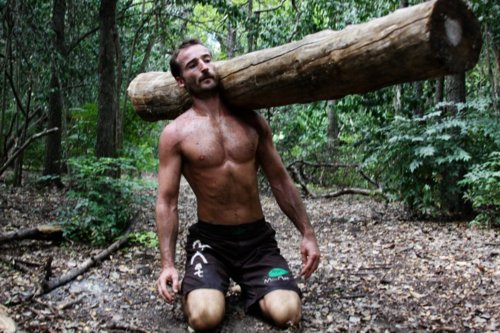
Le Corre is convinced that 20 to 30 minutes a day is all anyone needs for a killer workout, as long as it’s intelligently designed. By combining short, explosive bursts of running with lots of power work — jumps, climbs, and deadlifts — you can compress 2 hours of normal gym time into 20 minutes of constant motion.
Le Corre based MovNat heavily on the philosophy of French naval officer George Herbert. The modern world, Hebert believed, was producing hollow men who focused on appearance and forgot about function. At the same time, they stopped exercising with the wildness of kids and instead insulated themselves from risk. The cost, he felt, was far more destructive than they might think. Motivated to do what he could to realign our fitness philosophy, Hebert convinced the French navy to put him in charge of conditioning for a class of its recruits.
Next, Hebert set to work on an outdoor training facility. He designed it to look like a giant playground, equipping it with climbing towers, vaulting horses, sandpits, and ponds. Scattered about were rocks and logs and long poles to be used for throwing, or balancing, or passing hand-to-hand while running, or anything else an athlete dreamed up at the moment. Hebert had only one firm rule: No competing. When you try to beat the other guy, he believed, you test the other man’s weaknesses and not your own.
Within a few years, Hebert’s “Be Useful” system was adopted by the entire French navy. In 1913, speaking before the French Physical Education Congress, he astounded them with the results of tests he’d performed on 350 navy recruits. On a rating system that scored performance according to strength, speed, agility, and endurance, French sailors ranked with world-class decathletes.
Lee Saxby, P.T., a London-based physical therapist and the technical director of Wildfitness, an exercise program built around an evolutionary model of human performance. For years, Saxby had been teaching his clients that the key to overall health is a workout system that mimics the diversity of a hunter-gatherer lifestyle.

 Ontogeny recapitulates phylogeny. That is to say, the development of the individual is an abbreviated repetition of the development of the species. The attempt of this post is to show how the affect of domestication imposed on a mass of people, is the same as the indoctrination of an individual by a cult.
In more general terms, the idea that cults tend to promote an intense dependency is implicit in the unanimous definition reached by different specialists as to what is understood by “cult”: group or movement that exhibits a great or excessive dedication or devotion to some person, idea or thing and employing unethical manipulative techniques of persuasion and control designed to advance the goals of the group’s leaders, to the actual or possible detriment of members, their families, or the community” (Langone, 1985)
The following list describes the indoctrination of a cult on an individual:
1. isolation from former friends and family,
2. debilitation,
3. use of special methods to heighten suggestibility and subservience,
4. powerful group pressures,
5. information management,
6. suspension of individuality or critical judgement,
7. promotion of total dependency on the group and fear of leaving it., etc.
The above list represents the development of the individual which is an abbreviated repetition of the species development shown in the list below:
1. Indigenous peoples torn from nature, Indian Reservations, ‘civilization’
2. Disease, disconnect from ancestral traditions
3. Chemical dependency, poverty
4. Law enforcement, societal ‘norms’
5. Mass Media – political, social and spiritual
6. Cults use methods like chanting and repetitive activities to induce a state of suggestibility and to help the target shut off their ability to engage in critical thinking. In our civilization, this is achieved through Education, Religious indoctrination and Advertizing.
7. War, Debt
Russell Means is an Oglala Sioux activist for the rights of Native American people. He was the first national director of the American Indian Movement(AIM), and played a prominent role in the 1973 standoff at Wounded Knee. He is also an actor, appearing in numerous films including The Last of the Mohicans and Natural Born Killers. He states, “All policies of the United States government, both foreign and domestic, were bred and born on an Indian Reservation. That’s land policy, that’s health, that’s education, and of course economic.”

This work is licensed under a Creative Commons Attribution-NonCommercial-NoDerivs 3.0 Unported License.

‘Artificial light prevents trees and plants from adjusting to seasonal changes, alters animal behavior, foraging areas, migration timing and routes, and breeding cycles. Disruption of circadian rhythm is linked to depression, insomnia, cardiovascular disease, cancer.'(P Sassone-Corsi, Pharmacology Dept, Univ Cal, Irvine)
Human Beings are born to be diurnal animals (i.e. function during the day time). However, in order to maintain the so called ‘civilized’ structures of our modern society, we sacrifice the basic human right of millions of people worldwide to a restful sleep at night.
Too much artificial light upsets pineal gland function. It is theorized that light striking the retina will send signals to the pineal via neurotransmitters and that sunlight is ideal, while the spectrum of artificial light and light passing through glass is changed and may alter pineal function.
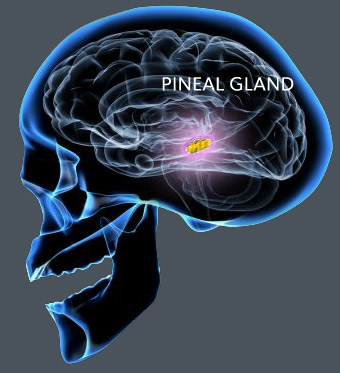
This disrupts the body’s circadian rhythm(including hormone levels), brain wave patterns, cell regulation, etc..
It is commonly known that melatonin levels drop precipitously in the presence of excessive artificial light.
For people who sleep “normal hours”, natural melatonin production rises sharply in the evening, and peaks between 1 am and 3 am. The peaks become smaller with advancing age after early childhood. The brain may secrete up to 20 times more melatonin at night than in the day time, hence melatonin is nicknamed “the hormone of darkness“.
Melatonin plays an important role in the following:
-
Regulating the circadian rhythms (daily body cycles)
-
Regulating the sleep patterns. This includes the speed of falling asleep, duration and the quality of sleep etc.
-
Influencing hormones in the body that regulate reproduction, the timing of ovulation, and aging etc.
-
Anti-aging: Melatonin is a powerful antioxidant, a compound that blocks the action of free radicals (activated oxygen molecules) that can damage cells. Therefore some scientists suggest that it has anti-aging functions.
-
Anti-cancer: Some studies showed that melatonin may suppress the growth of certain types of cancer cells, and may stimulate the natural killer cells (a type of white blood cells) to attack tumors.
Artificial light increases the amount of night activity and people don’t get enough sunlight, therefore they over-produce Melatonin.
- People that work nights or stay up late and don’t get outside much during the daylight hours won’t inhibit pineal secretions and this will overtax the pineal gland. Even a brightly lit room has only a fraction of the light that being outside has.
- Stress, refined sugars, and other factors that increase epinephrine output (as well as epinephrine medications) will increase melatonin production and if chronic cause pineal dysfunction.
24/7 illumination, and the resulting changes in circadian rhythms; disharmonizes people from natural cycles, which affects our physical and mental states.
This may also have an affect on the more subtle aspects of consciousness. Disruption of pineal gland function also seems detrimental to psychic abilities. In Eastern (Indian) terminology the ‘third eye’ is called the ‘ajna chakra’, about which there is a considerable body of information.
‘All psychic systems have their physical aspects in the body . . . With ajna chakra the physical equivalent is the pineal gland, which has long baffled doctors and scientists as to its precise function… Yogis, who are scientists of the subtle mind, have always spoken of telepathy as a “siddhi”, a psychic power for thought communication and clairaudience, etc. The medium of such siddhis is ajna chakra, and its physical terminus is the pineal gland, which is connected to the brain. It has been stated by great yogis . . . that the pineal gland is the receptor and sender of the subtle vibrations which carry thoughts and psychic phenomena throughout the cosmos.’ (Swami Satyananda Saraswati, 1972).
‘Most spontaneous psi events occur whilst the person is drowsy, or asleep and dreaming. All research indicates that this state of consciousness is psi-conducive. Melatonin, and probably pinoline, are made at night and are related to sleep and possibly pinoline is the trigger for dreaming, in that it is an endogenously produced hallucinogen.’ (S. M. Roney- Dougal. Recent Findings Relating to the possible role of the Pineal Gland in affecting Psychic Ability.Journal of the Society for Psychical Research, Vol. 55, No. 815,)
Artificial light adversely affects everything from algae levels in water that determine cleanliness, to the behavior of plants, insects and animals.
One quarter of energy consumption worldwide is used for lighting.
‘Light pollution is one of the fastest growing and most pervasive forms of environmental pollution, according to many environmentalists, naturalists, and medical researchers.’ (Ecological Consequences of Artificial Night Lighting. Rich, Longcore (eds.) (2006) Environmental Health Perspectives v117 (2009)
This work is licensed under a Creative Commons Attribution-NonCommercial-NoDerivs 3.0 Unported License.
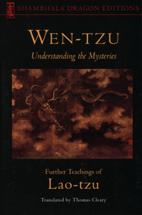 This post is a short summary of the more sensual aspects of Taoist philosopher Lao Tzu’s book Wen Tzu, translated by Thomas Cleary.
In the ancient days, we are told humans were guided by the mind of the world through the interaction of their bodies with the environment. Today we only talk to ourselves through our ego, trapped in our heads.
Lao Tzu says “To know what is good for the senses and the body and roam in the harmony of the vital spirit is the roaming of the sage.”
This book contains much of the accumulated Taoist wisdom imparted to Lao Tzu, wisdom that was already ancient in his day. Wen Tzu describes how “society deteriorated with the dawning off deliberate effort, people slowly left their innocent mind in an attempt to understand the world instead of learning from it. Their minds became compartmentalized and segregated, no longer unified.” The Taoist have discovered ways to return to the innocent mind of the body.
“Sages let their mind be and do not think, abandoning intellectualism they return to utter simplicity, they adjust to their real conditions.”
Lao Tzu also discusses the process of listening, which is of utmost importance in building strong relationships: “The general principles for listening are to empty the mind so that I is clear and calm: discount moods and don’t be full of them, have no thoughts and no rumination.”
Pre-dating Maurice Merleau-Ponty’s Phenomenology of Perception by 2,500 years, Wen Tzu claims “What is felt in the mind emerges from the body. The attainment of enlightenment may be contacted physically but cannot be sought.” Here the Taoist Master could be mistaken for a phenomenologist!
This work is licensed under a Creative Commons Attribution-NonCommercial-NoDerivs 3.0 Unported License.
“Early man walked away as modern man took control.
Their minds weren’t all the same, to conquer was his big goal,
So he built his great empire and slaughtered his own kind,
Then he died a confused man, killed himself with his own mind.”
-Bad Religion “We’re only gonna die”
As Alan Watts explained, “You say ‘I came into this world.’ You didn’t. You came out of it. So we have this hostility to the external world because of the superstition, the myth, the absolutely unfounded theory that you, yourself, exist only inside your skin…You are still the process…When I meet you, I see not just what you define yourself as–Mr so-and- so, Ms so-and- so,–I see every one of you as the primordial energy of the universe coming on at me in this particular way. I know I’m that, too. But we’ve learned to define ourselves as separate from it… You ARE a symptom of nature. You, as a human being, you grow out of this physical universe in exactly the same way an apple grows off an apple tree.”
If we believe the world is made of separate things, we believe we can take them apart and have ‘this’ without ‘that’. The belief that we are separate from the world is a consequence of the ego.
Steve Taylor writes about the impact of the ego in his 2010 book The Fall:
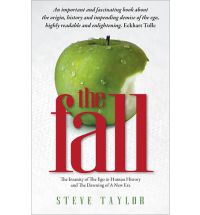
“The powerful new ego ‘gobbled up’ the psychic energy which had previously been devoted to present-centred awareness, to the act of perceiving the immediate is-ness of the phenomenal world. This energy was diverted to the ego; as a result we could no longer perceive the world the same intense, vivid vision, and our attention became ‘switched off’ to the presence of Spirit. The phenomenal world became a shadowy, one-dimensional place, and natural phenomena became lifeless objects. In Australian Aboriginal terminology, we lost the ability to ‘enter the dreaming’ of natural phenomena… In addition, because we live in our thoughts so much, we find it very difficult to live in the present, and to appreciate the reality and beauty of the world in which we live. The world becomes a dreary, half-real place, perceived through a fog of thought. As a result of this, most people feel a basic sense of incompleteness and discontent. And this negative state is the basic source of the cravings for possessions and power and status, which are a way of trying to complete ourselves and compensate for our inner discord. We try to complete ourselves – and make ourselves significant – by gaining power over other people or by collecting wealth and possessions… And in turn, this desire for wealth and power is at the heart of warfare and oppression. But just as importantly, our strong sense of ego means that it’s difficult for us to empathize with other people. We become ‘walled off’ from them, unable to ‘feel with’ them and to experience the world from their perspective or to sense the suffering we might be causing them. We become able to oppress and exploit other people in the service of our own desires.”(1)
Researcher Michael Tsarion takes the notion further:
“The ego is threatened by the phenomena of the external world. Because the ego gives us our subjective sense, we can set the parameters of how reality is registered. We can filter, censor, and distort whatever our senses perceive. In the end, the ideas formed by ego-consciousness about reality become more real than reality. As time goes by people lose all interest in the real as the real. Under the auspices of the ego, human beings are incarcerated within mental prisons… What exists in the darkened landscape that stretches around and beyond the ego’s ithyphallic ivory control tower is considered by the ego to be potentially threatening. In other words, the content of man’s own unconscious is considered a threat to the ego. This means that most human beings are subconsciously threatened by aspects of their own selves…From its remote tower, the ego looked out over Nature in order to find its reflection there, but could no longer discern it. This is because Nature contains or “reflects” back the self of man, not the ego of man. And so, search as it might, the ego cannot find its own visage in the phenomena of the world. Primitive man could see his own reflection in Nature because he did not have the same level of subjectivity as his descendents. He and Nature were one… The difficulty of egoic existence is that humanity has been gradually losing contact with reality. After all, animosity toward Nature is ultimately animosity toward the real. And reality includes man’s physical body. Ergo, existentially and psychologically speaking, western man is largely estranged not only from Nature – his true creator – but from his physicality. In other words, he has become a mental and ultimately technological creature. Losing touch with his body and world causes man to lose touch with Existence, as the sages and philosophers of antiquity defined it. Instead of being attentive to his Existence, man has become infatuated with essence and mystery. In fact, as a few Existential philosophers and psychologists state, man has altogether lost interest in the significance of Existence. Since the dawn of history, he has been preoccupied with the “mystery” of life, rather than life itself. Simply put, man is infatuated with mystery, not Being.” (2)
 Morris Berman theorizes about the origin of the ego in his book Coming To Our Senses: Body and Spirit in the Hidden History of the West. He professes that phonetic language created an inner narrative(ego) which severed our connection with the sensual world creating a void inside us(nemo). The nemo created ideologies because it needs a validation for existence. All the ideas we conceive to explain the mystery of the world such as God, enlightenment, fame, success, or higher meaning, don’t actually exist. Ideologies are constructs of the mind that we believe are autonomous and distinct from or own understanding. The need for meaning is a result of the primary loss of wholeness. The consequences of written(symbolic)languages are also explored in David Abram’s The Spell of the Sensuous and The Alphabet Versus the Goddess by Leonard Shlain.
The developement of the ego varies depending on the culture, with indiginous hunter-gatherers having the least inflated egos. Steve Taylor notes:
“According to the early 20th century anthropologist Lucien Levy-Bruhl, the essential characteristic of indigenous peoples was their less sharpened sense of individuality. In his words; ‘To the primitive’s mind, the limits of the individuality are variable and ill-defined.’ He notes that, rather than existing as self-sufficient individual entities – as we experience ourselves – indigenous peoples’ sense of identity is bound up with their community and land. He cites reports of primal peoples who use the word ‘I’ when speaking of their group, and also notes that indigenous peoples’ sense of individuality extends to objects they use and touch. A person’s clothes, tools and even the remains of meals and their excrement are so closely linked to them that to burn or damage them is thought to death or injury to the person. (This is one of the principles by which witchcraft is believed to work.) Similarly, George B. Silberbauer notes that, to the G/wi of the Kalahari, identity was more group-referenced than individual. That is, a person would identity herself or himself with reference to kin or some other group…
Some colonists actually became aware of the problem, and realized that they would never be able to fully ‘civilize’ the natives unless they developed their sense of ‘self-ness’. Senator Henry Dawes put his finger on it when he wrote of the Cherokees in 1887, ‘They have got as far as they can go [i.e. they are not going to progress any further], because they hold their land in common. There is no selfishness, which is at the bottom of civilization.’ The English missionaries in Australia tried various measures to develop the aborigines’ sense of individuality. They made them live in separate houses and tried to stop going into each other’s. They baptized them so that they would think of themselves in terms of permanent name, instead of the fluid aboriginal names which could change and include the names of other tribe members. It didn’t work though – the aborigines never developed a sense of personal ownership over their houses and the possessions inside them. They wandered in and out of each other’s houses all the time, and continually swapped possessions…
The naming practices of certain peoples suggest this too. For us, a name is a permanent label which defines our individuality and autonomy. But Australian Aborigines, for example, do not have fixed names which they keep throughout their lives. Their names regularly change, and include those of other members of their tribe. Other native peoples use tekonyms – terms which describe the relationship between two people – instead of personal or kinship names. On the other hand, our sense of ego is so defined and strong that many of us experience a basic sense of separation to nature, other human beings and even our own bodies.”(1)
The ego is a major hurdle in becoming more sensual, more embodied. One way to quiet the ego is to simply perform a physical act, another way is through Zen mindfulness meditation which silences the mind. Mindfulness meditation can be practiced at any time, while doing anything, it will be covered in future posts.
Taylor agrees that the quieting of mental chatter is imperative:
“In the same way that the natural quietness and stillness of the world around us is always covered over with man-made noise, the natural quietness of our minds is constantly disturbed by the chattering of our ego-selves. This chattering fills our minds from the moment we wake up in the morning till the moment we go to sleep at night an endless stream of daydreams, memories, deliberations, worries, plans etc. which we have no control over and which even continues (in the form of dreams) when we fall asleep. This ‘inner noise’ has as many bad effects as the mechanical noise outside us. It actually creates problems in our lives, when we mull over tiny inconveniences or uncertainties which seem to become important just because we’re giving so much attention to them, and when we imagine all kinds of possible scenarios about future events instead of just taking them as they come. It means that we don’t live in the present, because we’re always either planning for and anticipating the future or remembering the past… this constant inner chattering also means that we can never give our full attention to our surroundings and to the activities of our lives. Our attention is always partly taken up by the thoughts in our minds, so that wherever we are and whatever we’re doing we’re never completely there.”(3)
Mindfulness meditation can quiet the mind at any time, while doing anything, it will be covered in future posts.
In my experience I have found sensuality to be the key ingredient in loosening the ego’s grip over our lives. If awareness is focused in the senses, the ego falls silent.
Notes
1. Steve Taylor, The Fall, 2010
2. Micheal Tsarion, Disciples of the Mysterium (Martin Heidegger and the Question of Being) 2010
3. Steve Taylor, The Power of Silence New Renaissance magazine Vol. 8, No. 2
This work is licensed under a Creative Commons Attribution-NonCommercial-NoDerivs 3.0 Unported License.

 In his 2010 book investigating the origins of the ego entitled The Fall, author Steve Taylor discusses the life of non-agricultural people:
” Until around 8000 BCE, all human beings lived as hunter-gatherers. They survived by hunting wild animals (the man’s job) and foraging for wild plants, nuts, fruit and vegetables (the woman’s job). When anthropologists began to look at how contemporary hunter-gatherers use their time, they were surprised to find that they only spent 12 to 20 hours per week searching for food -between a third and a half of the average modern working week! Because of this, the anthropologist Marshall Sahlins called hunter-gatherers the original affluent society. As he noted in his famous paper of that name, for hunter-gatherers, the food quest is so successful that half the time the people do not seem to know what to do with themselves…. Most native peoples are strikingly egalitarian and democratic. For example, traditional Australian Aborigine groups don’t have chiefs or leaders, and there are no laws or penalties for crimes. The elders make most important decisions, and therefore have some authority, but the rest of the tribe are free to disagree with them. In traditional African societies, there are no classes or castes, and the most common form of government is rule by the elders of the community. As in Aboriginal society, however, the elders don’t have absolute authority but are merely part of a democratic process…. Amost all contemporary hunter-gatherers show a striking absence of any of the characteristics that we associate with social inequality. The anthropologist James Woodburn speaks of the profound egalitarianism of immediate-return foraging peoples and emphasizes that no other way of human life permits so great an emphasis on equality. Foraging peoples are also strikingly democratic. Most societies do operate with a leader of some kind, but their power is usually very limited, and they can easily be deposed if the rest of the group aren’t happy with their leadership. People don’t seek to be leaders – in fact if anybody does show signs of a desire for power and wealth they are usually barred from consideration as leaders. And even when a person becomes a leader, they don’t have the right to make decisions on their own. Decisions are made in co-operation with other respected members of the group… Apart from the small amount of meat they ate (10%-20% of their diet), their diet was practically identical to that of a modern day vegan – no dairy products and a wide variety of fruits, vegetables, roots and nuts, all eaten raw (which nutrition experts tell us is the healthiest way to eat.) This partly explains why skeletons of ancient hunter-gatherers are surprisingly large and robust, and show few signs of degenerative diseases and tooth decay. As the anthropologist Richard Rudgley writes, We know from what they ate and the condition of their skeletons that the hunting people were, on the whole, in pretty good shape. The hunter-gatherers of Greece and Turkey had an average height of five feet ten inches for men and five feet six for women. But after the advent of agriculture, these had declined to five feet three and five feet one. An archaeological site in the lower Illinois Valley in central USA shows that when people started cultivating maize and switched to a settled lifestyle, there was an increase in infant mortality, stunted growth in adults, and a massive increase in diseases related to malnutrition.” (1)
One of the oldest agricultural sites is Asikli Hoyuk in Turkey, dating to 8,000 B.C. Here we see that the burden of farming was already effecting health:
“The skeletal remains of these women show spinal deformities indicating that they had to carry heavy loads. This does not itself prove that there was a division of labour between the sexes. The fact that the men seem to have outlived the women might be interpreted as sign that the women were subject to more strenuous physical labor than their male counterparts.” (2)
“The Neolithic evidence show indications of increased physical workload in the osteological material on both genders, where the male skeletons show signs of joint disease and trauma arguably caused by cutting timber and tilling.” (3)
The Neolithic Revolution involved far more than the adoption of a limited set of food-producing techniques. During the next millennia it would transform the small and mobile groups of hunter-gatherers that had hitherto dominated human history, into sedentary societies based in built-up villages and towns, which radically modified their natural environment by means of specialized food-crop cultivation (e.g., irrigation and food storage technologiesthat allowed extensive surplus food production. These developments provided the basis for concentrated high population densities in settlements, specialized and complex labor diversification and trading economies, the development of non-portable art, architecture, and culture, centralized administrations and political structures, hierarchical ideologies and depersonalized systems of knowledge (writing). The first full-blown manifestation of the entire Neolithic complex is seen in the Middle Eastern Sumerian cities.
There is little to no sign of warfare or social inequality before the introduction of city-states around 6000 years ago:
“Evidence from artwork, cemeteries and battle sites suggests that there was an eruption of these social pathologies during the 4th millennium BCE, starting in the Middle East and central Asia The groups who lived in the area – including the original Indo-Europeans and Semites would begin massive waves of migrations… Over the following centuries, they spread over the Europe, Middle East and Asia, killing and conquering the peaceful Old World peoples they came across, including the civilization of Old Europe (which was reconstructed by the archaeologist Marija Gimbutas). By 500 BCE, these peoples had more or less completely conquered the whole of Eurasia, leaving only a few indigenous peoples such as the Laplanders of Scandinavia, the tribal peoples of Siberia, and the indigenous peoples of the forests and hills of India. In mainland Europe the only surviving non-Indo-European indigenous peoples were the Basque people of northern Spain (who amazingly still survive today) and the Etruscans of Italy, who were soon to be wiped out by the Romans.” (1)
In stark contrast, hunter-gatherers generally keep to themselves and enjoy the subtle qualities of life. Frank Hole, an early-agriculture specialist, and Kent Flannery, a specialist in Mesoamerican civilization, have noted that, “No group on earth has more leisure time than hunters and gatherers, who spend it primarily on games, conversation and relaxing.” Agricultural societies require far more work than the 3 hrs per day average of hunter-gatherers.
Notes
1. Taylor, S. 2005. The Fall
2. Esin, U., and S. Harmankaya. 1999. Aşikli. In Neolithic in Turkey: the cradle of civilization
3. Wright, K. I. 2000. The Social Origins of Cooking and Dining in Early Villages of Western Asia. Proceedings of the Prehistoric Society
This work is licensed under a Creative Commons Attribution-NonCommercial-NoDerivs 3.0 Unported License.

"Puddle 1"
Living systems are open, self organizing and interact with their environment.
Living systems, such as the human body, are maintained by flows of information, and energy/matter.
Living creatures are not static things, living systems are processes of energy and information flow. The body maintains its form in the same way a waterfall maintains its form while being made of continuously flowing water. The waterfall is new water at every moment, yet it keeps the illusion of continuous form, the same with our bodies.
Information is any kind of event that effects the state of a dynamic system
We are made of the energy and information that we gather from the world, and we recycle energy and information back out into the world. Where does the body end?
Philosopher Alan Watts describes the nature of reality:
“But you see, when, as a scientist, you describe the behavior of a living organism, you try to say what a person does, it’s the only way in which you can describe what a person is, describe what they do. Then you find out that in making this description, you cannot confine yourself to what happens inside the skin. In other words, you cannot talk about a person walking unless you start describing the floor, because when I walk, I don’t just dangle my legs in empty space. I move in relationship to a room. So in order to describe what I’m doing when I’m walking, I have to describe the room; I have to describe the territory. So in describing my talking at the moment, I can’t describe it as just a thing in itself, because I’m talking to you. And so what I’m doing at the moment is not completely described unless your being here is described also. So if that is necessary, in other words, in order to describe MY behavior, I have to describe YOUR behavior and the behavior of the environment, it means that we’ve really got one system of behavior.
Your skin doesn’t separate you from the world; it’s a bridge through which the external world flows into you, and you flow into it.
Just, for example, as a whirlpool in water, you could say because you have a skin you have a definite shape you have a definite form. All right? Here is a flow of water, and suddenly it does a whirlpool, and it goes on. The whirlpool is a definite form, but no water stays put in it. The whirlpool is something the stream is doing, and exactly the same way, the whole universe is doing each one of us, and I see each one of you today and I recognize you tomorrow, just as I would recognize a whirlpool in a stream. I’d say ‘Oh yes, I’ve seen that whirlpool before, it’s just near so-and-so’s house on the edge of the river, and it’s always there.’ So in the same way when I meet you tomorrow, I recognize you, you’re the same whirlpool you were yesterday. But you’re moving. The whole world is moving through you, all the cosmic rays, all the food you’re eating, the stream of steaks and milk and eggs and everything is just flowing right through you.”
Buddhism denies the existence of a permanent or static entity that remains constant behind the changing bodily and non-bodily components of a living being. The word anatta refers to the notion of “not-self”. Just as the body changes from moment to moment, so thoughts come and go; and according to the anatta doctrine, there is no permanent conscious substance that experiences these thoughts, as in Cartesianism: rather, conscious thoughts simply arise and perish with no “thinker” behind them.
Martin Heidegger stressed that humans cannot think on their own, but rather are incited to think by Being. In other words, Being works through beings.
The Hopi concept of Hikswi, or ‘breath’ is very similar:
Breath/Wind/Air- imparts life, motion and thought to all things.
It is the soul of the visible landscape, the secret realm from whence all beings draw their nourishment.
What we call our ‘mind’ , ‘soul’, or ‘spirit’, is the wind.
Spirit = Spiritus (Latin) = Breath/Wind
Ruach = (Hebrew) = Breath/Wind/Spirit
Psyche = (Greek) = Breath/Life/Mind
Pneuma = (Greek) = Breath/Soul
Soul = Anima = Animos = Wind
Atmosphere = Atman = Atmos = Air/Soul
Our self or psyche is the process of the Air circulating through us.
“The air also binds us to the oceans and soils. The air was once felt, in fact for the huge bulk of our human tenure in this Eairth, we felt the air as a kind of mystery that was unusually sacred and holy, precisely because you can’t see it. It is that through which we see everything else. We see it lofting the clouds over head, bending the branches of trees, and bending the grasses. We see that it moves all sorts of things around us, but we can’t see it directly. We see that we cannot think a single thought without continually imbibing this invisible substance. So how do we know it’s not also moving our own thoughts, the air. For many indigenous people, it is the air that thinks and dreams within us. The mind is not thought of as something that we carry around inside our heads, or inside our bodies, or rather, it does circulate within us, but the air, or the psyche within us is entirely continuous with the psyche all around us, with the bending grasses, with what is loft in the clouds. This is also a very, very old notion, but it’s a very different kind of spirituality than that to which human kind has given itself for the last couple thousand years.”
-( David Abram, Stockholm, 2010)
Kensho is a Zen-Buddhist word meaning “seeing one’s nature” or “true self”. It generally refers to the realization of non-duality of subject and object.
Zen Koans are useds as training. A koan is known as: ‘Who am I’, since it is this question that guides the enquiry into one’s true nature. The realization that there is no ‘I’ that is doing the thinking, but rather that the thinking process brings forth the illusion of an ‘I’, is a step on the way to Kensho.
Satori is sometimes loosely used interchangeably with kensho, but kensho refers to the first perception of the Buddha-Nature or True-Nature, sometimes referred to as “awakening.” Distinct from kensho, which is not a permanent realization but a clear glimpse of the true nature of existence, satori is used to refer to a “deep” or lasting realization of the nature of existence. It is therefore customary to use the word satori, rather than kensho, when referring to the realization of the Buddha and the Patriarchs with Bodhisattvas; these figures recognized that “all things are Buddha things” and therefore any separation between self and the universe is illusory.
The world and I reciprocate one another.
This work is licensed under a Creative Commons Attribution-NonCommercial-NoDerivs 3.0 Unported License.
“Life is not a problem to be solved, but a reality to be experienced.”
-Soren Kierkegaard
Hola,
Sensuality and Animism are two heavily loaded terms (which will be discussed in future blogs), so remember that they are just labels. I use them because both terms have a lot to do with the body. The worldview of the Sensual Animist places body at the core of experience, much like the philosophy of phenomenology. Major influences include the works of David Abram, Dr. Jon Kabat-Zinn, and Philip Shepherd’s masterwork New Self, New World.
The Sensual Animist strives to disolve the division between mind/body, self/other, subject/object, physical/spiritual, etc… Living through harmonious interplays of relationship rather than choosing sides.
Above all, the Sensual Animist’s awareness is focused on the experience of being alive and being thankful for it. Enjoy it, otherwise, what’s the point?
I am not claiming this to be the correct worldview, but it is a worldview that myself and others may choose to live by.
So, if this way of perceiving the world is of interest to you, please leave a comment or check out this blog periodically to find new information about sensuality, phenomenology, animism, nature, excercise(including sex), art(including sex), and mindfulness.
Cool Runnings,
Adam
This work is licensed under a Creative Commons Attribution-NonCommercial-NoDerivs 3.0 Unported License.

 Sensualanimist